The handbook
Clear, concise guidance on wills, trusts, powers of attorney, probate, beneficiaries, and the choices families face.
Attorney · Author · Educator
Estate planning isn’t only for the wealthy, sick, or elderly. Eric G. Matlin makes it human, understandable, and impossible to keep putting off.
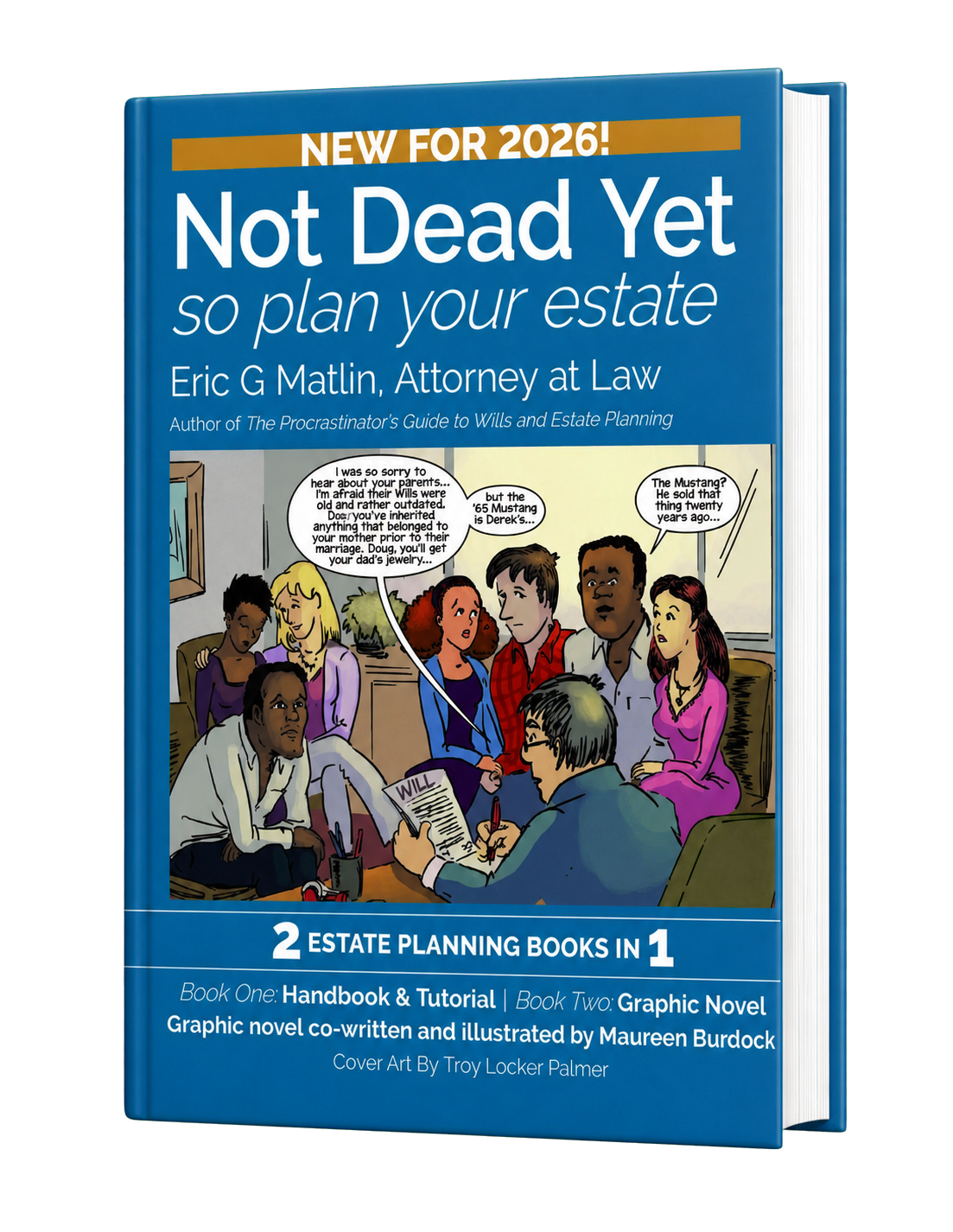
New Third edition · 2026
“Life’s most momentous events don’t always follow your schedule.”
— Eric G. MatlinNot Dead Yet: so plan your estate turns decades of real-world experience into a practical roadmap for protecting the people you love.
Clear, concise guidance on wills, trusts, powers of attorney, probate, beneficiaries, and the choices families face.
A visual story that makes complex decisions relatable—because sometimes seeing the consequences is the best way to understand them.
For every adult, at every life stage. Read it, share it, and start the conversation your family will be grateful you had.
Start reading before you choose an edition.
Available exclusively on Amazon. Each edition delivers the same clarity, practicality, and hard-won expertise.
The original—two-thirds clear-spoken legal roadmap, one-third graphic novel. The complete experience Eric intended.
Buy on AmazonGenerously typeset for readers who prefer larger fonts and uninterrupted prose, without the graphic novel.
Buy on AmazonRead it on any device. Includes the full graphic novel, beautifully formatted for the Kindle reader.
Buy on Amazon Eric G. Matlin
Eric G. Matlin founded Matlin Law Group and concentrated his practice on estate planning for more than 30 years.
Now retired from active practice and serving Of Counsel, he writes and speaks to make an often intimidating subject accessible. His belief is simple: an appropriate level of estate planning is universal—and planning is one of the most meaningful gifts you can give the people you love.
Invite Eric to speakEric is available in the Chicago area for engaging, no-cost estate planning conversations with libraries, senior centers, associations, workplaces, houses of worship, and community groups.
These concise answers are a starting point for a more useful conversation—not a substitute for advice about your particular circumstances.
Once a child turns 18, parents no longer automatically have legal authority to access medical information or make financial decisions. A basic plan may include health-care and financial powers of attorney.
A power of attorney generally must be signed while the person has legal capacity. If capacity has been lost, a court-supervised guardianship may be necessary. An attorney can evaluate the specific circumstances and cost.
Probate is the court process for administering assets held in a deceased person’s individual name without an effective beneficiary designation. Some families plan to reduce probate, depending on their assets and goals.
They can transfer particular assets, but they may not address incapacity, contingencies, taxes, minor beneficiaries, or family dynamics. They should be coordinated with the rest of an estate plan.
A testamentary trust is created through a will after death. It can provide structure and protection for children, beneficiaries with special needs, or anyone who may benefit from managed distributions.
A will directs probate assets and can nominate guardians. A funded revocable living trust can manage assets during incapacity and pass them outside probate, but it requires careful setup and ongoing coordination.
Estate, gift, inheritance, income, and property-tax issues may apply depending on where you live and what you own. Tax rules change, so individualized legal and tax advice is important.
Blended families often need explicit planning to balance a spouse’s security with inheritances for children from prior relationships and to avoid unintended results.
Do-it-yourself documents can fail through incorrect signing, ambiguous language, missing contingencies, or poor coordination with account titles and beneficiaries. Local legal requirements matter.
Often, a thoughtful conversation helps future decision-makers understand their roles and reduces surprises. The right level of disclosure depends on your family and circumstances.
Review it every few years and after major changes such as marriage, divorce, births, deaths, a move, health changes, or a significant change in assets or the law.
Charities can be supported through a will or trust, beneficiary designation, donor-advised fund, or other planning strategy. The best approach depends on your charitable and tax goals.